The Defibrillators are back.
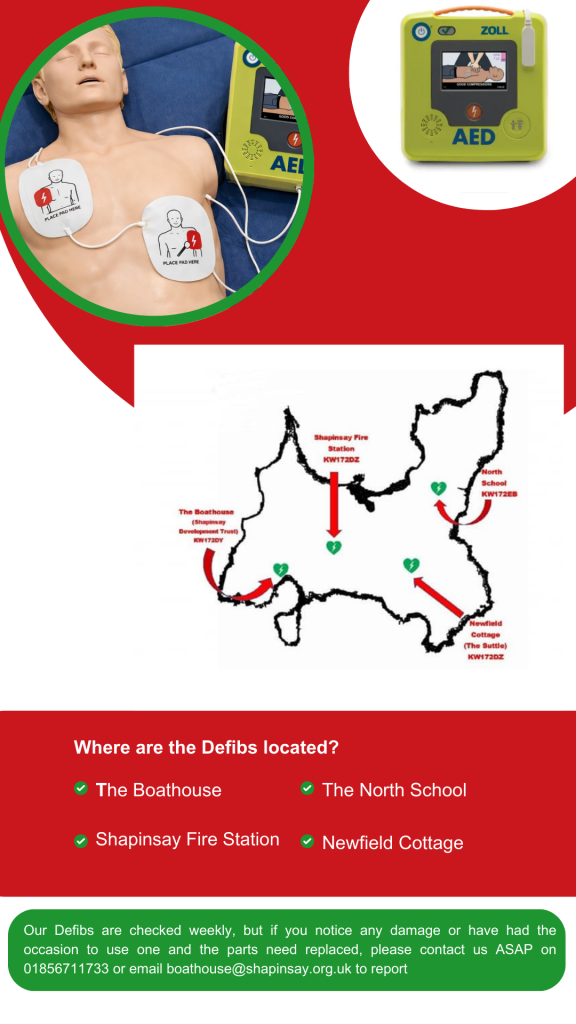
I am delighted that after a delay in getting spare parts due to weather, we have now got all the defibs back in their cabinets. I thought it would be a great chance to update you all on where they are located. There’s one in the north end at the North School located on the building nearest the road, one towards the east side at Newfield Cottage, located on the shed at the roadside, one at the Firestation, located at the front of the building and one located on the Boathouse, located at the far side of the front porch! (This one will alarm while it’s open but as soon as you close it, it stops!).
What do you need to know about an AED/Defib? These are easy to use, there are diagrams that tell you where to put the pads and it will talk you through each step of the process. Perhaps most importantly for your reassurance – they assess the patient and will ONLY shock if needed.
What To Do in an Emergency
Remember “DRS ABC” (Danger, response, Send for help, airway, breathing, CPR, Defibrillator)
Danger
☐ Make sure the area is safe
Response
☐ Check for a response – shout and gently shake
Airway & Breathing
☐ Check airway for obstructions, listen and feel for breathing
➡ Not breathing or only gasping? Act now
Send for help
☐ Call out for HELP and/ or dial 999 or 112
☐ Send someone to get an AED
☐ Put your phone on speaker and follow instructions
CPR
☐ Place hands in the centre of the chest
☐ Push hard and fast (to the tune of “Staying alive” works well for beat!”
☐ 30 chest compressions to 2 breaths if possible
Defibrillator
☐ Turn the AED ON
☐ Follow the voice instructions
☐ Attach pads as shown on the pictures
☐ Stand clear during analysis
☐ Deliver shock if advised
☐ Resume chest compressions immediately
Keep going until:
☐ The person starts breathing
☐ Emergency services arrive
☐ You are told to stop
Remember
You cannot make things worse — doing something saves lives.